 LoadingLoadingLoading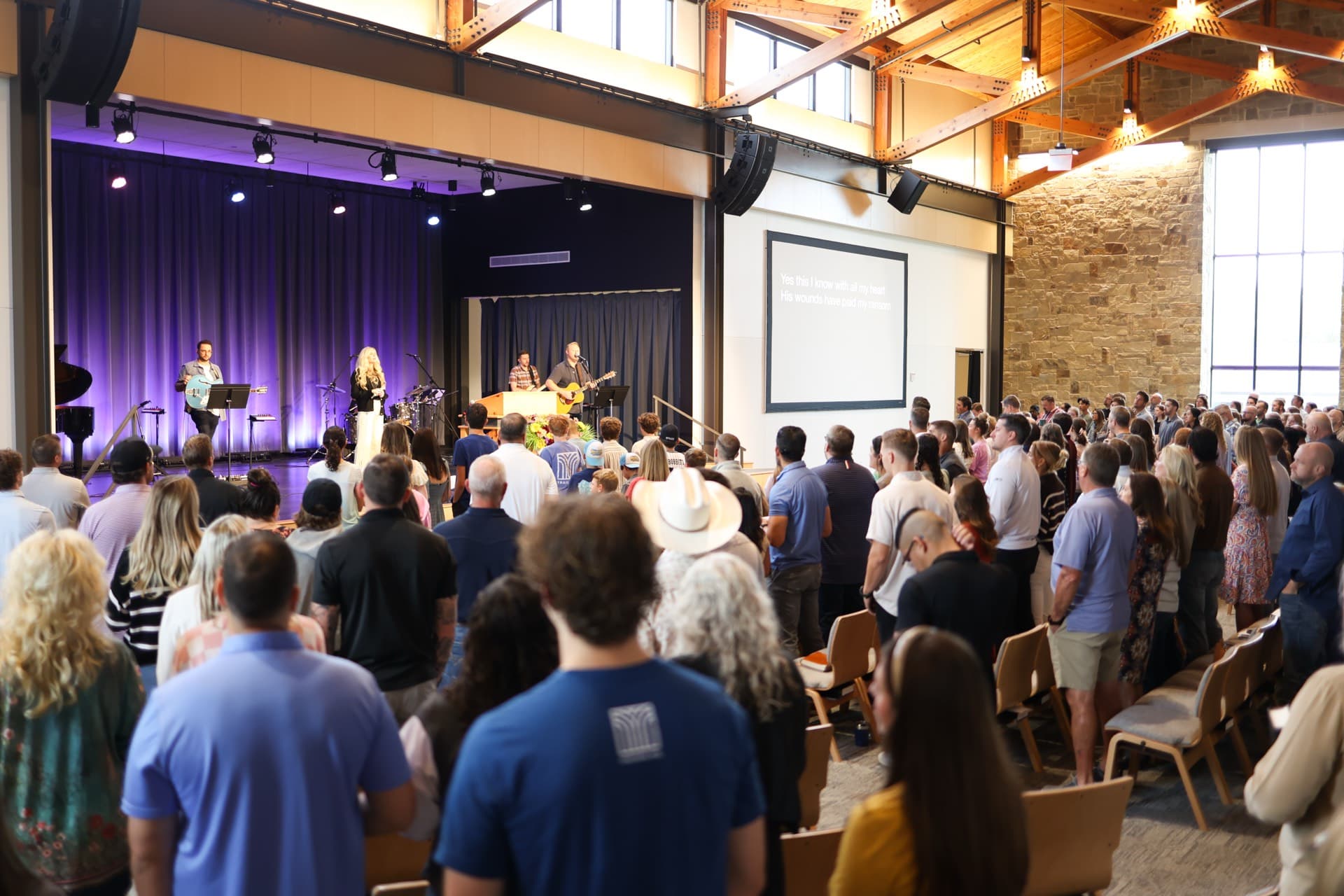
The name expresses a pair of shaping commitments for corporate worship in the life of the local church.
The word doxology comes from the Greek doxa (weight, glory, or splendor) and logos (word or expression). It refers to glorious words of worship offered to God. In a wider sense, doxology encompasses all of the expressions of worship when the church gathers in ascribing worth and adoration to God.
This leads to theology, formed from another pair of Greek words: theos (God) and logos (word or study). At its simplest, theology is the study of God. More deeply, theology reminds us that true praise must be shaped by truth, that our worship should be filled with the riches of who God is as he has revealed himself in Scripture.
Healthy church gatherings hold doxology and theology together. Acceptable worship flows from right knowledge of God, and right knowledge of God leads to affectionate worship.
Our prayer and our labor are focused on seeing church gatherings marked by revelation and response, transcendence and immanence, reverence and relevance, doxology and theology.
Imagine for a moment that you are in the 16th century attending a Sunday morning worship service somewhere in the hills of Europe. An ordinary gathering space would have been a low-lit cathedral where most of the light illuminated only from the front of the room, where the altar stands. A chancel choir sang canticles in Latin while the congregation sat back and passively listened. The Scriptures were read in a language the people did not understand, followed by prayers also spoken in Latin. People sat in the dark while under the lights professional clergy worshiped God on their behalf. In light of all of this, many saw a great need: the church stood in need of a reformation of worship. A reformation that would bring the Word of God into the language of the people. A reformation where the people of God would actually participate in corporate worship instead of sitting idly by. A reformation that put the gospel back at the center of the Christian faith.
As this reformation advanced through Europe, the steeples and tops of many cathedrals gave signal to what was happening inside the building. One of the main slogans of the day was post tenebras lux (after darkness, light). So, they chose to place a rooster atop the building to signify that the light of the gospel shone brightly in that congregation. The rooster signified that reformation had taken place in those churches.
Now fast forward to today. Imagine walking into a modern church in our western context. What might you see? Another dark room where the only light is coming from the front of the room, this time from stage lights or an LED wall where an altar used to stand. The choir has been replaced with professional musicians who are playing songs mostly for entertainment while the congregation sits back and passively listens. Thankfully, the Bible is now translated into English, but the sermons generally place too little emphasis on actually explaining what it says and means. And prayer is too often reduced to a transitional element, used most frequently to help musicians either “magically” appear or disappear from the stage. People sit in the dark while the professional ministers worship God on their behalf. Five hundred years later and we need another reformation of worship.
That is why we chose the rooster as the new emblem for Doxology & Theology– to signal that a new reformation is coming. A reformation that puts God at the center of the worship gathering, not man. A reformation where Scripture governs the Sunday morning service, not pop culture ideas about what church should look like. A reformation that proclaims the gospel as the only story that should shape our liturgies. A reformation that seeks to build up the body of Christ by giving Christians what they need to hear, not just what they want to hear. And finally, a reformation that is mindful that the rest of the world is watching, and that holds out the life, death, and resurrection of Jesus as the only offer of hope and peace in a time of despair and chaos.
Like all movements, ours has small beginnings: individual pastors, worship leaders, and committed church members who desire to see this reformation of worship take hold in their own churches. And these individuals will go on to influence entire congregations, and those congregations will go on to influence other churches, until perhaps, the Lord will see fit to raise up a whole host of churches all over the world that desire to see worship restored to its rightful place. In the meantime, let us work together and pray diligently. Let our movement be marked by a spirit of humility and gentleness, not one of self-righteousness. Let us be known not primarily by what we are against, but by what we are for: congregations that joyfully sing songs rich in theology and Biblical truth, pastors committed to expositional preaching that stirs our affections for Christ, and churches devoted to prayer, both corporately and in private. This is the work of Doxology & Theology–to be always reforming towards these ends, all for the glory of God and the good of his church.