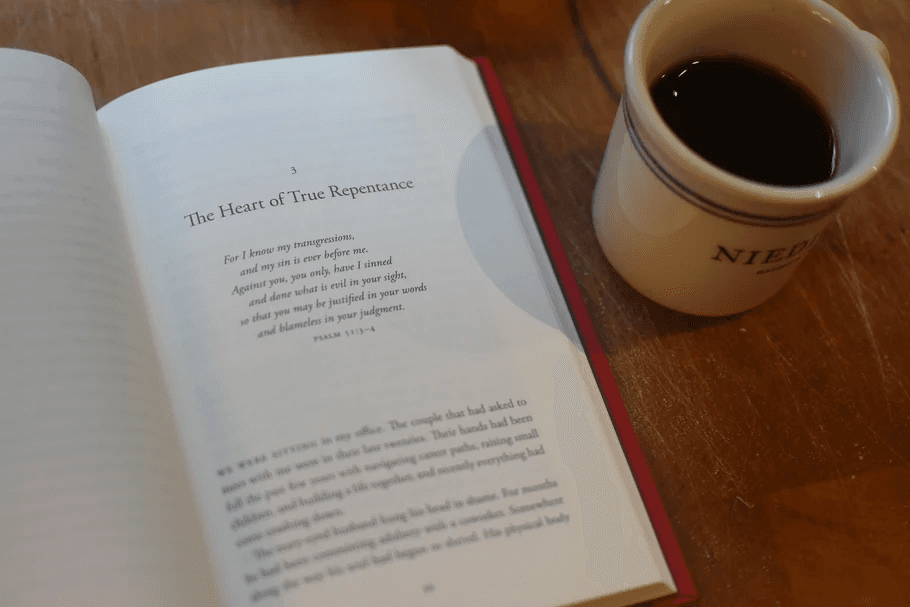
Note: This article is taken from Create in Me a Clean Heart: Experiencing God's Abundant Mercy in Psalm 51, which is available now on Crossway and Amazon.1
God will not turn away the heart bruised by transgression. He will not refuse the spirit crushed beneath the weight of sin. The broken spirit need not for a moment try to hide its true state. A brokenhearted worshiper does not waste time trying to posture before God. He or she simply pleads for mercy, completely undone. Undoubtedly, the words of Psalm 51:17 have dripped from the lips of countless saints through the ages as they cried out to the Lord in times of incredible sorrow, sin, and suffering.
The sacrifices of God are a broken spirit; a broken and contrite heart, O God, you will not despise.
– Psalm 51:17
Why a Broken Heart?
John Bunyan wrote his book The Acceptable Sacrifice on Psalm 51:17, and it stretches more than thirty-five pages long on this one verse. It is chock-full of careful thought and pastoral help as it answers the question "Why is a broken heart so significant in the eyes of God?" I will outline Bunyan's reasoning because it was so helpful to my own understanding.
The first reason God delights in brokenhearted worship is that "a broken heart is the handiwork of God; a heart of his own preparing, for his own service; it is a sacrifice of his own providing."2 Just as God provided the lamb for the offering when Abraham took Isaac up the mountain to worship, so God provides the necessary offering in all his people: hearts broken under the weight of conviction, now laid bare before him in contrition and repentance. Bunyan wrote of the heart, "That is the cabinet, when unlocked, where God lays up the jewels of the gospel."3 The Lord breaks the hard heart and then binds it up with grace, making it a fit altar for his worship.
Another reason God delights in brokenhearted worship is that a broken heart is humble and submissive. It bows before God in reverent fear and gives God the glory that he alone deserves.4 The brokenhearted do not approach the throne of grace with ego and bravado; they go to God with a divine mixture of humility and dependence, offering themselves wholly to the Lord.
The third reason a broken heart is so sweet in the sight of the Lord is that a broken heart treasures Christ. Jesus becomes exceedingly dear to the one who has tasted and seen that the Lord is good (Ps. 34:8). As the brokenhearted consider the great love they have been shown in Jesus, they prize him above all else and know him afresh as their great physician, their Savior, and their Redeemer. Bunyan conveyed this truth beautifully with these words: "As bread to the hungry, as water to the thirsty, as light to the blind, and liberty to the imprisoned; so, and a thousand times more, is Jesus Christ to the wounded, and to them that are broken-hearted."5
The fourth reason a broken heart is precious in the eyes of the Lord is that it is a thankful heart, one that is grateful for the grace it has received.6 The human heart is not one-dimensional but multifaceted; it is capable of being many things at once. So the heart completely broken over sin can at the same time be totally thankful. And because of its sure position before God, a broken heart can even genuinely rejoice in the glorious reality of forgiven sin.
With Bunyan's helpful explanations in mind, let's now look at how Tim Keller explained the beauty of the broken and contrite heart. He wrote,
What is the broken and contrite heart God wants so much? It is a heart that knows how little it deserves yet how much it has received. To know only the first truth is to be self-loathing, to know only the second is to be self-satisfied-and both kinds of hearts will be self-absorbed. David is talking instead about hearts broken by costly, free grace-knowing both how lost and how loved we are. This gets us out of ourselves.7
It is the costly, free grace of God and his great love for us that fuels our worship. God's love is undeserved and pure. It is unearned and unwavering. Our love for him does not originate from within us, so there is no room for pride or boasting in our hearts. Rather, when we understand the extent of his grace and choose to receive it with our broken hearts, our love for God flows back to him in response. A broken heart leads to true worship.

Get a copy of Create in Me a Clean Heart by Matt Boswell on Crossway and Amazon.
Notes